Tips for Preventing and Alleviating Allergy Symptoms
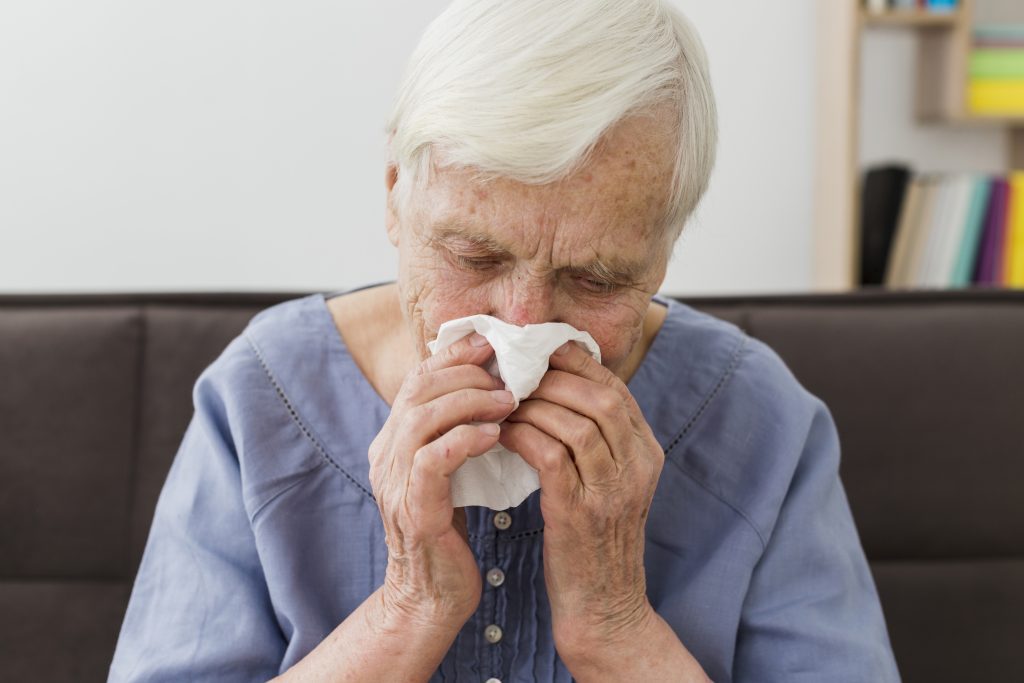
Spring brings with it an increase in temperature and daylight hours, but it also constitutes a time of great risk for people who suffer from allergies. Two of the main sources of allergies, pollen and dust mites, are quite prevalent at this time of year. Although allergies affect all ages, the elderly are particularly vulnerable to their symptoms due to their weaker immune systems. While there is no definitive cure for allergies, there are, fortunately, several measures that can be taken to prevent, combat, and/or alleviate allergy symptoms.
Dust Mite Allergy
Spring is a time of great abundance of dust mites, as the ideal conditions for their development are temperatures around 21ºC and humidity between 75 and 80%. To eliminate or prevent this source of allergies, you can take the following measures:
- Let the sun in
- Keep the house between 18 and 20ºC and the humidity between 50% and 60% (use a dehumidifier or air conditioner for this purpose)
- Use polyester sheets and duvets and avoid feather pillows
- Wash bed linen weekly at 60ºC
- Vacuum and disinfect surfaces
- Avoid using carpets or clean underneath them regularly
Pollen Allergy
Spring is also the most active time for plant reproduction, resulting in a high concentration of pollen in the air. Unlike dust mites, pollen is something that cannot and should not be eliminated, but you can take several steps to avoid contact with it:
- Check the weather forecast or RPA to stay informed about pollen concentrations in the air.
- Ventilate your home and/or go out more in the evening when there is less pollen.
- Use an air filter to purify the air inside your home.
- Avoid mowing the lawn and drying clothes outside.
- If you are going for a walk, preferably go to beaches or other coastal areas where there is less pollen concentration.
- Regularly wash your hands, face, and body to remove any trace of pollen, especially after going outside.
General Tips
For those who suffer from one or both allergies, here are some tips that apply to any type of allergy:
- Keep your home clean and dehumidified.
- Ventilate your home regularly.
- Maintain good personal hygiene.
- Wear sunglasses or a hat outdoors to avoid visual contact with wind-borne particles.
- Talk to a doctor or pharmacist to see which medications are best. These can be consumed to combat allergies (a pulmonologist is a good option).
Finally, you can contact KindCare, whose caregivers can rid your home of potential allergens while caring for your elderly relative. Contact us on 960 139 517 or visit www.kind-care.pt to learn more.
Sources:
https://zyrtec.pt/cuidados-domesticos-para-aliviar-os-sintomas-das-alergias
https://www.interdomicilio.pt/oito-dicas-para-evitar-alergias-particularmente-em-idosos/
https://www.saudebemestar.pt/pt/medicina/alergologia/alergia-aos-polens
https://www.rpaerobiologia.com
https://www.hospitaldaluz.pt/pt/saude-e-bem-estar/alergia-acaros-prevenir